
Buckeye Artificial Turf Pros
Desert Climate Turf Conversion (Dead-Lawn Replacement) in Buckeye, AZ
Desert climate turf conversion in Buckeye, AZ. Replace a dead or dying lawn with drought-tolerant turf built for heat. Free estimates.
- 15+ Years local experience
- 500+ Projects completed
- Licensed & Insured
Serving Buckeye and nearby communities.
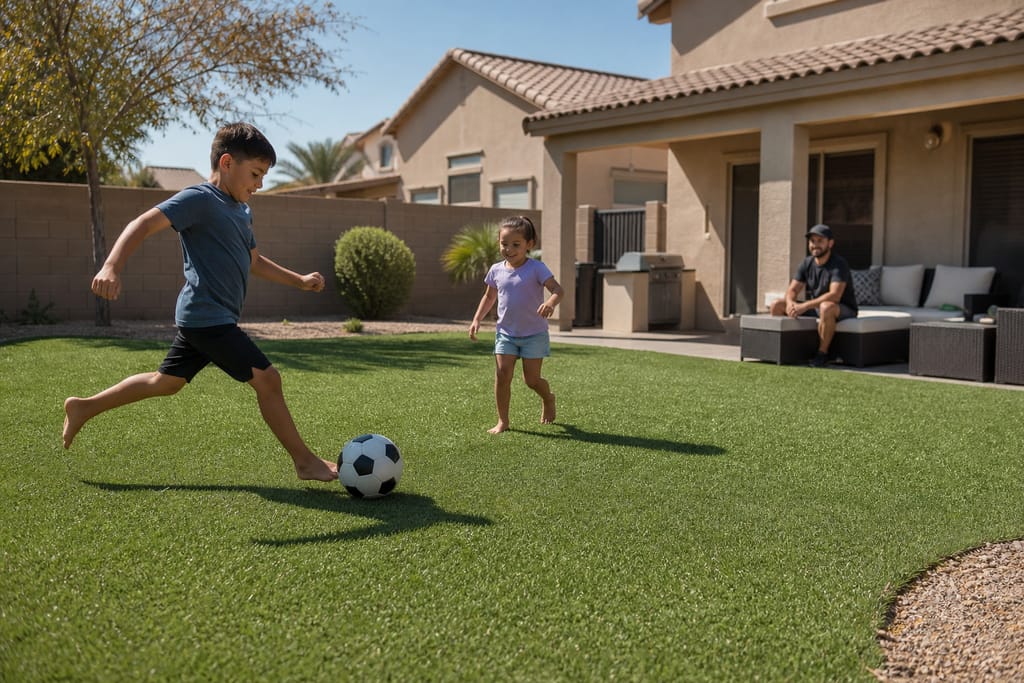
A dying Bermuda lawn in Buckeye summer heat isn't coming back without constant water, and the water bill climbs every month you keep trying. Buckeye Artificial Turf Pros converts dead or struggling natural lawns into permanent turf, removing the old grass, capping irrigation, and installing a surface that doesn't fight the climate.
This is different from a bare-dirt first install. There's old grass and roots to pull, irrigation lines to deal with, and often compacted soil underneath from years of watering the same dead patch. We treat the removal step as seriously as the new turf install.
What's included
What's Included with Desert Climate Turf Conversion (Dead-Lawn Replacement)
Typically included: dead grass and root removal, irrigation line capping, soil grading, base compaction, turf install with seaming and infill.
Optional: irrigation rerouting for remaining planted areas, soil amendment for adjacent garden beds, haul-away of removed sod.
Customer prep: stop watering the lawn 1-2 weeks before the project if possible to make removal easier, clear patio furniture from the work area.
Want a clearer scope?
Get a Free EstimateHow it works
How Our Desert Climate Turf Conversion (Dead-Lawn Replacement) Process Works
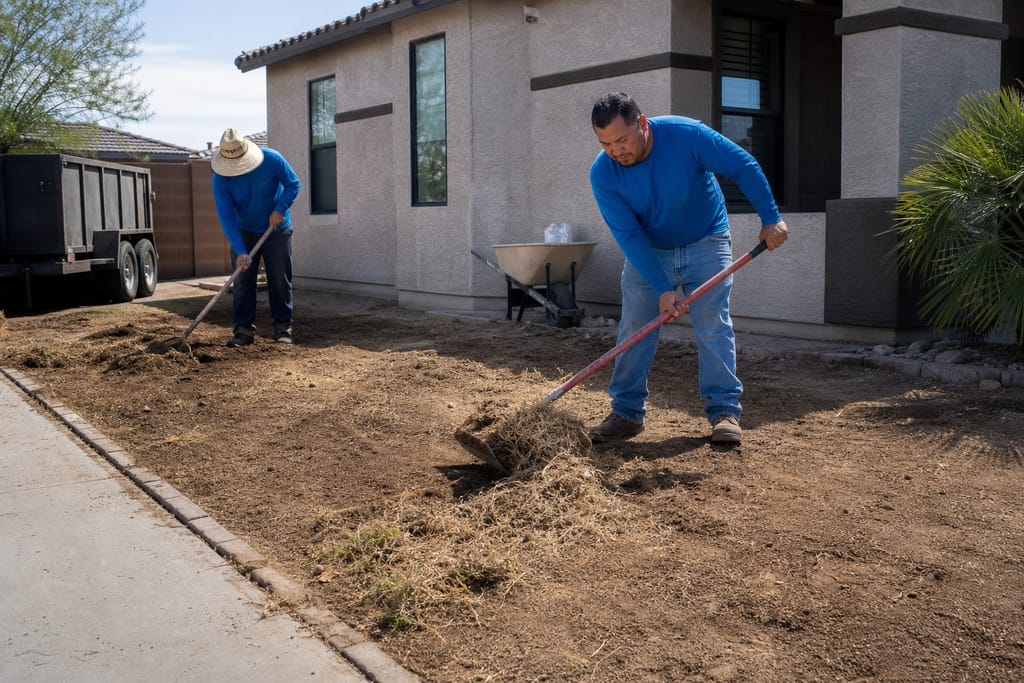 Step 1
Dead lawn removal
Existing dead grass and roots are stripped away to prepare a clean base.
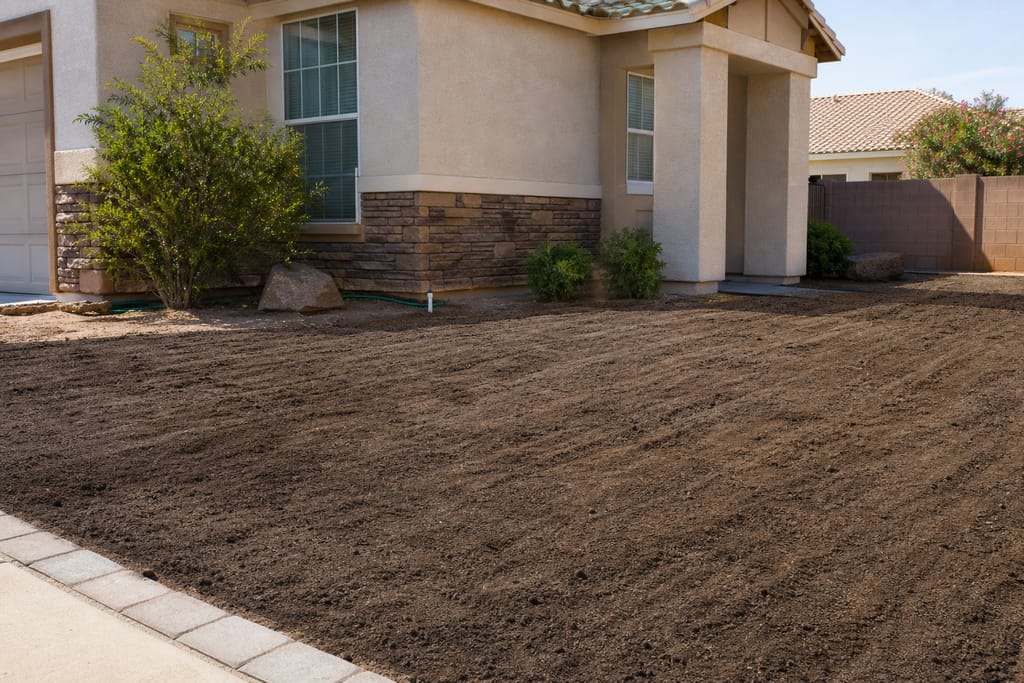 Step 2
Soil amendment
Soil is treated to remove debris and stabilize the surface for turf installation.
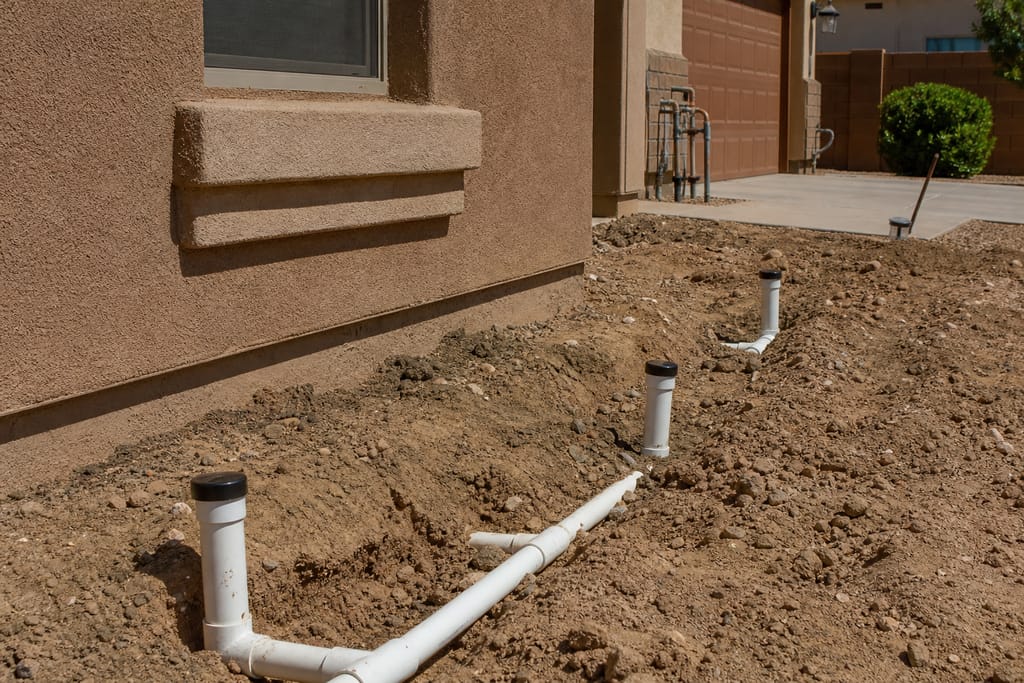 Step 3
Irrigation capping
Old sprinkler lines are capped or rerouted to prevent water waste under turf.
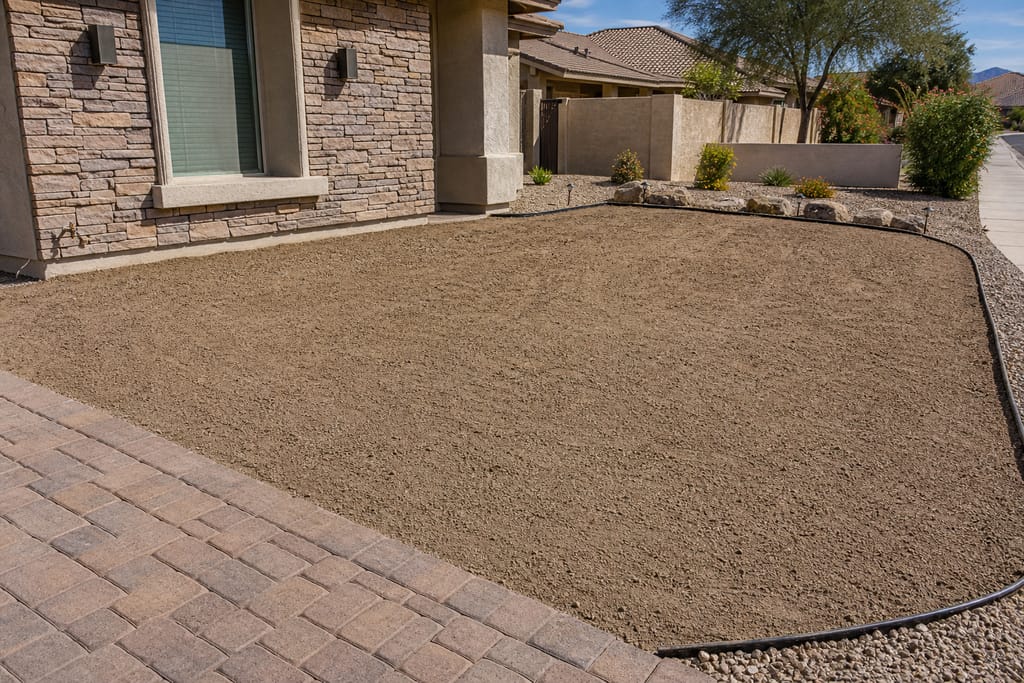 Step 4
Water-wise base layer
A drought-resistant base is installed to support long-term turf stability.
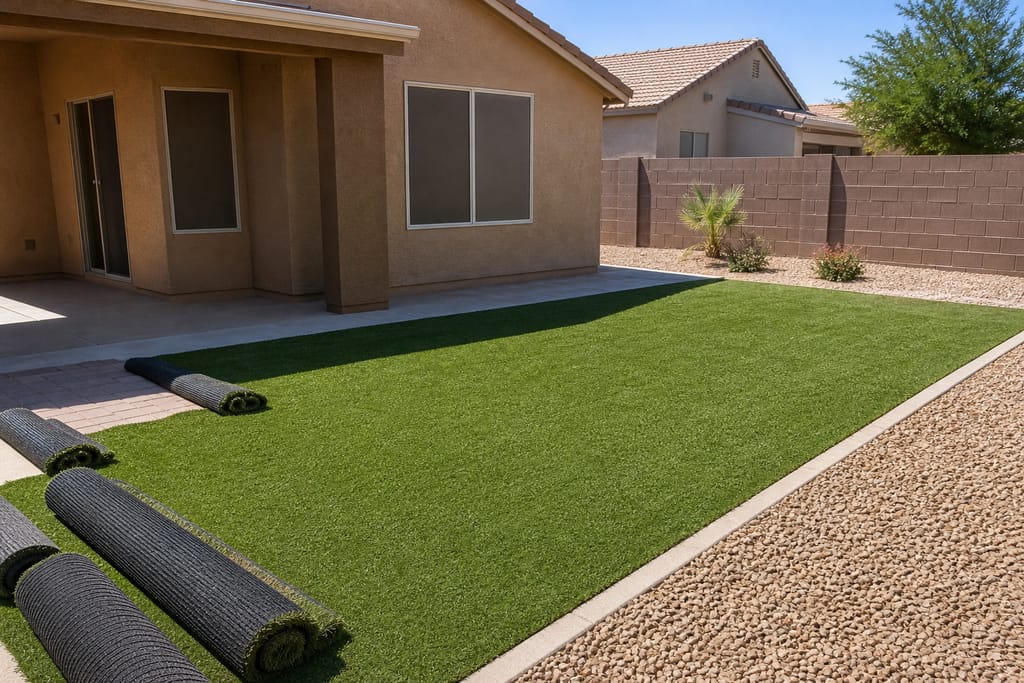 Step 5
Turf conversion installation
New turf is laid over the converted area, replacing the previous lawn entirely.
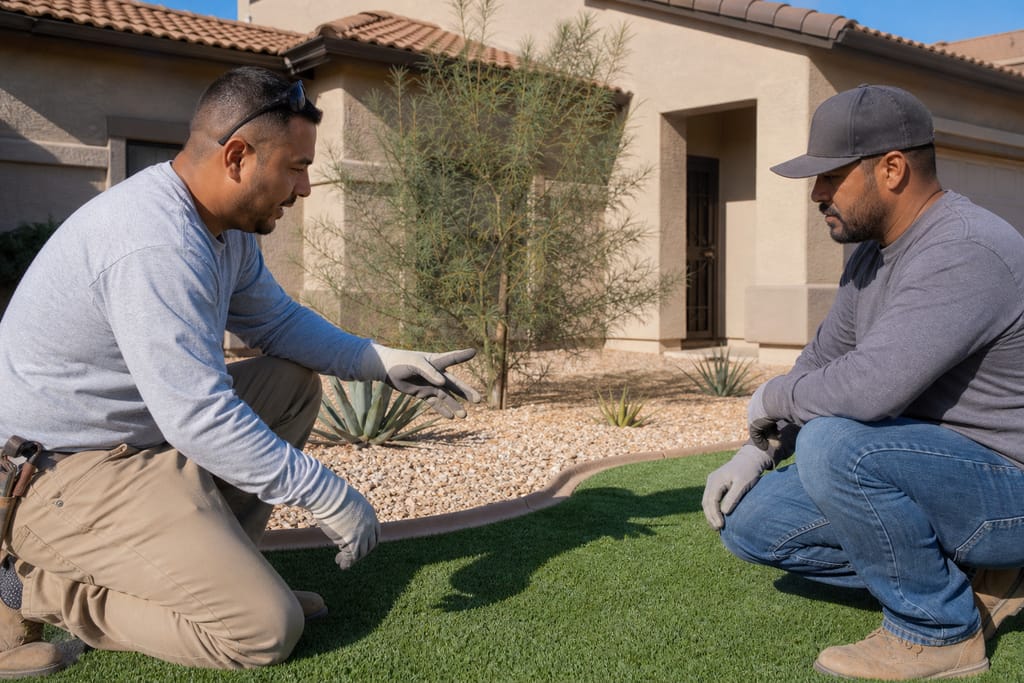 Step 6
Water savings review
Homeowners are shown estimated water savings from the completed conversion.
Materials
Materials and Methods for Desert Climate Turf Conversion (Dead-Lawn Replacement)
These choices are built around not needing irrigation again once the old lawn is gone.
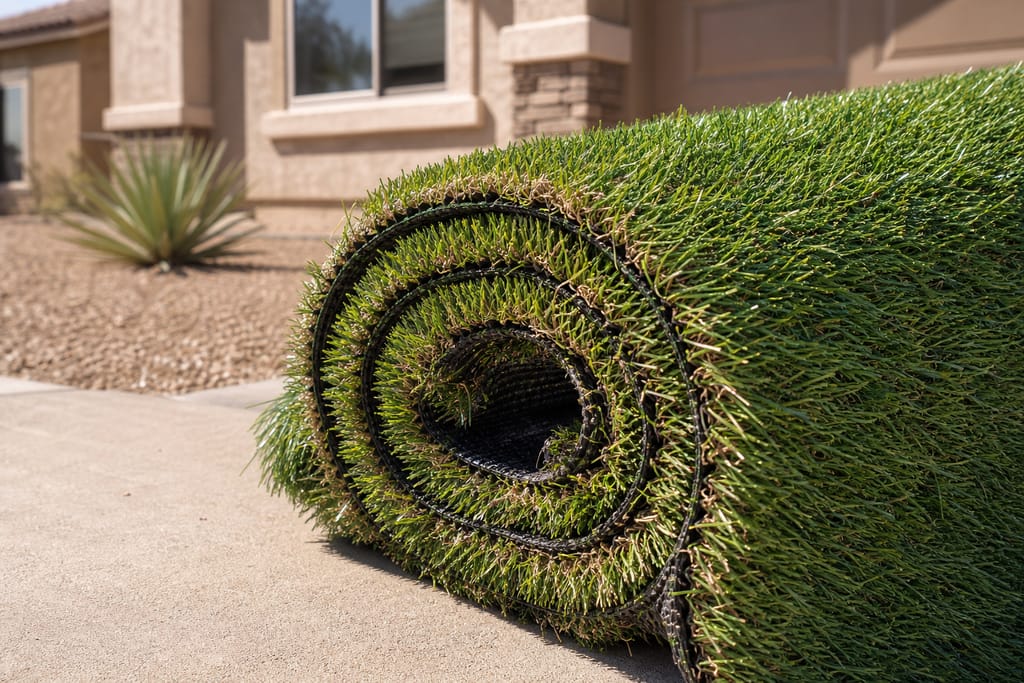
Drought-tolerant turf fibers
Fibers selected for resilience in Buckeye's arid, low-water climate, holding color without any watering.
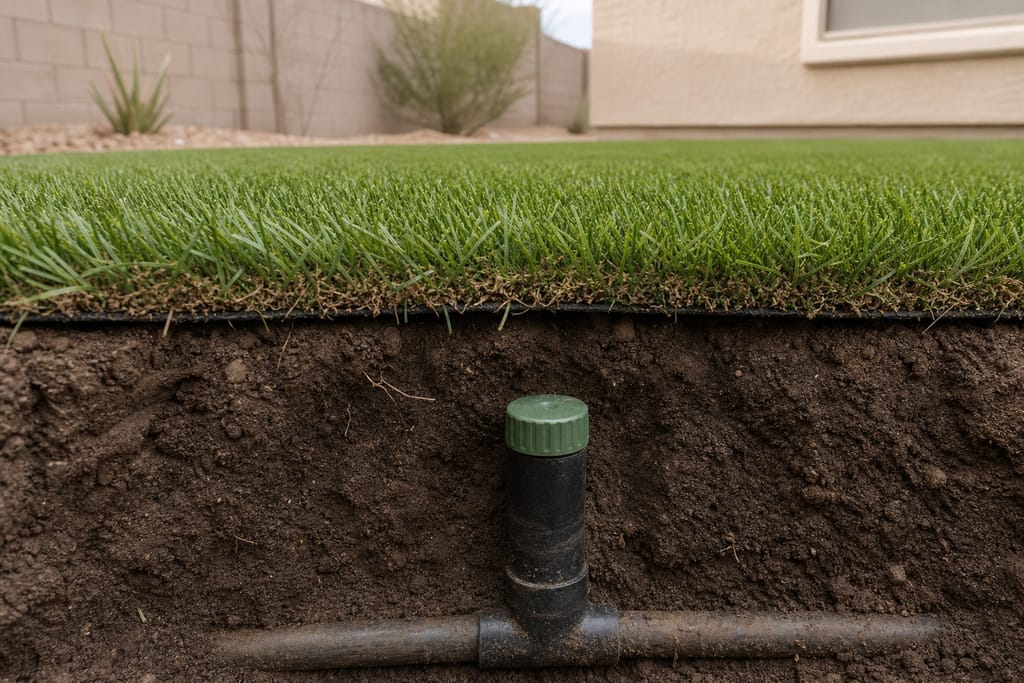
Capped irrigation fittings
Fittings seal off unused sprinkler lines beneath the new turf so nothing leaks under the surface.
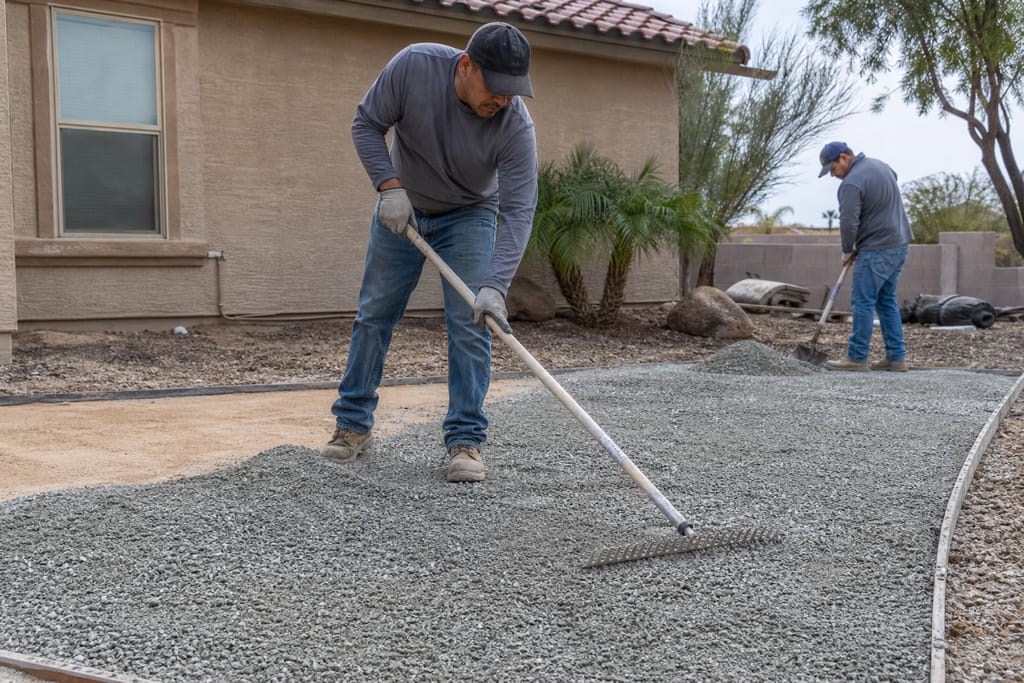
Recycled base aggregate
Base material reduces environmental impact while still compacting solid over Buckeye's caliche-heavy soil.
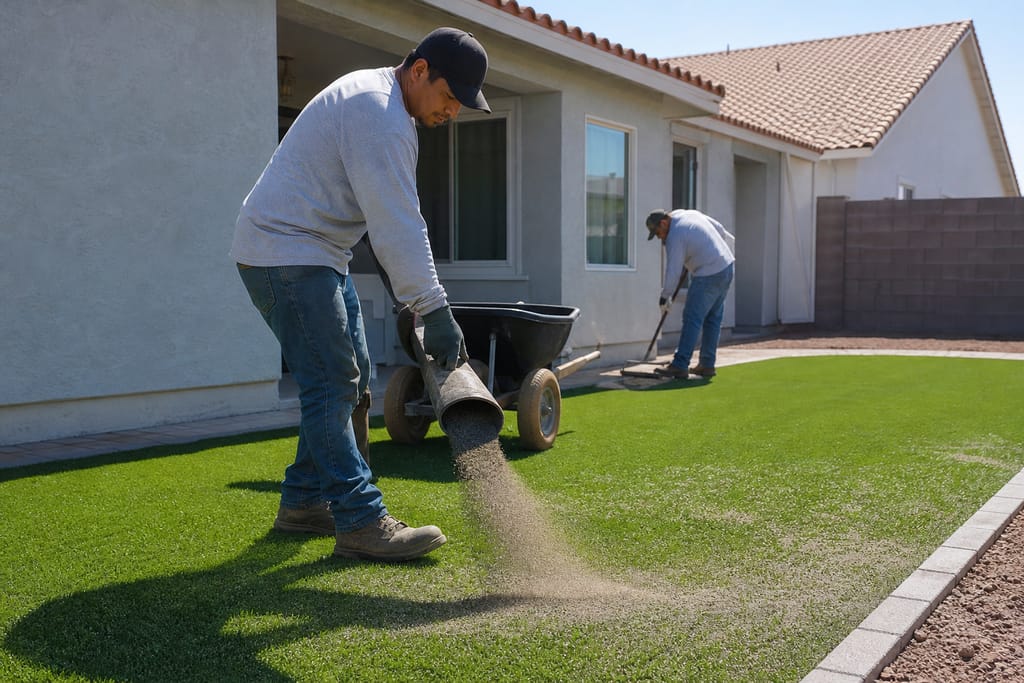
Low-water infill
Infill chosen to minimize any maintenance needs in a yard that no longer gets watered.
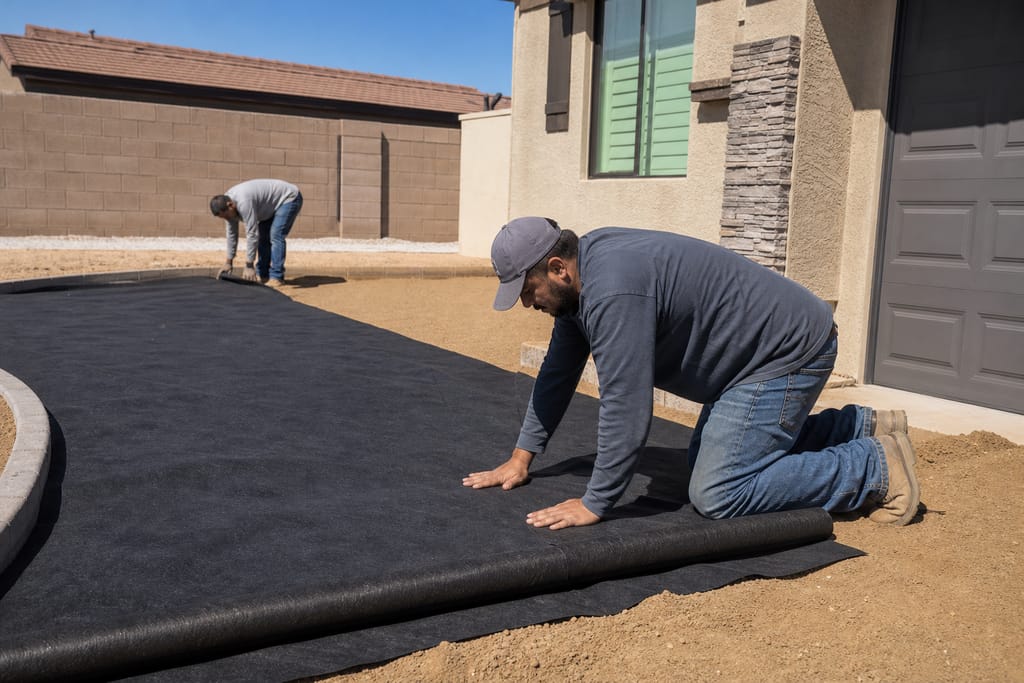
Erosion control fabric
Fabric layer stabilizes soil during removal and regrading before new base goes down.
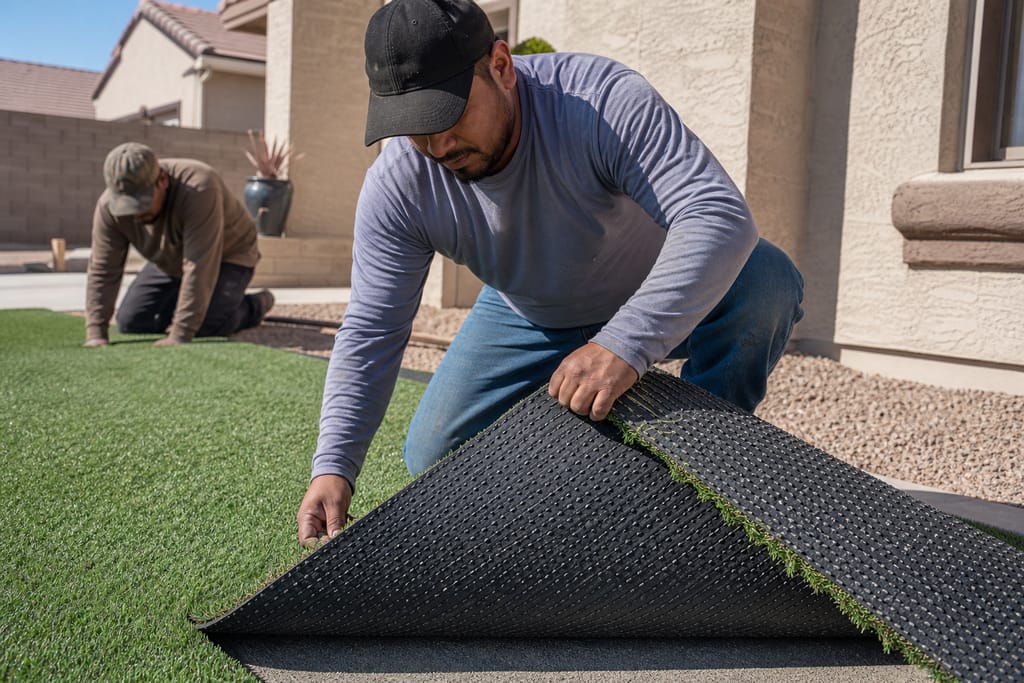
Sun-stable turf backing
Backing resists degradation from direct Buckeye sun exposure year-round.
Questions on materials?
Get a Free EstimateCost
What does a Desert Climate Turf Conversion (Dead-Lawn Replacement) cost in Buckeye?
Cost includes both removing the old lawn and installing the new surface, so it runs a bit higher than a bare-dirt first install. Call for a free, written estimate based on your current lawn size.
| Project type | Typical range | What’s included |
|---|---|---|
| Small dead lawn (under 500 sq ft) | $4,500–$7,500, | grass removal plus standard turf install. |
| Average backyard conversion | $8,000–$15,000, | full removal, irrigation capping, and turf install. |
| Large or multi-zone lawn | $16,000+ | , bigger lots or front and back combined conversion. |
These are typical local ballparks — final cost depends on scope, materials, and site conditions. A free estimate gives you an accurate, itemized number for your home.
Want a number for your home?
Get a Free EstimateTimeline
How Long Does a Desert Climate Turf Conversion (Dead-Lawn Replacement) Take?
Removing an established lawn adds a day or two compared to a bare-dirt install.
- 01
Consult and measurement
same day - 02
Dead grass removal and irrigation capping
1 day - 03
Base compaction
1 day - 04
Turf installation and infill
1–2 daysdepending on yard size
Need a schedule that fits?
Get a Free EstimateCodes & permits
Permits and Codes for Desert Climate Turf Conversion (Dead-Lawn Replacement)
Confirm specifics with the City of Buckeye before starting any irrigation work.
| Typically needs a permit | Often no permit |
|---|---|
| Irrigation line rerouting that alters existing plumbing connections | Standard lawn-to-turf conversion within the existing yard footprint |
| Grading changes that redirect drainage toward neighboring lots | Capping unused sprinkler heads in place |
Need help with permits?
Get a Free EstimateDIY vs pro
DIY vs Hiring a Pro for Desert Climate Turf Conversion (Dead-Lawn Replacement)
| DIY | Hire a pro |
|---|---|
| Workable for small patches of dead grass in a side yard | We've pulled enough dead Buckeye lawns to know when roots need extra removal time before base goes down |
| Risky for full lawns where leftover roots and improperly capped irrigation cause turf to settle unevenly later | Proper irrigation capping prevents water pooling under your new turf months after install |
Not sure DIY vs pro?
Get a Free EstimateWhen to call
When to Call for Desert Climate Turf Conversion (Dead-Lawn Replacement)
Call Buckeye Artificial Turf Pros for a free estimate on converting your dead lawn.
- Your lawn is mostly dead or dying despite regular watering
- Your water bill keeps climbing to keep a struggling lawn alive
- You're ready to stop mowing and watering for good
Seeing warning signs?
Get a Free EstimateFAQs
Desert Climate Turf Conversion (Dead-Lawn Replacement) FAQs
Does turf help lower my water bill in Buckeye?
Yes. Removing a natural lawn eliminates the irrigation that keeps grass alive through Buckeye's summer, which is usually the biggest line item on a summer water bill.
What is the downside to artificial turf?
Upfront cost is higher than reseeding, and it needs occasional rinsing and infill refresh. For homeowners already losing the water-versus-dead-grass battle, most find it pays off within a few years.
How long does Artificial Turf take for a full lawn conversion?
Most backyard conversions take 3-5 days total, counting removal, base prep, and turf install.
Is DIY lawn conversion a good idea?
For a small patch, sure. For a full yard, leftover grass roots and improperly capped sprinklers are the most common reasons DIY conversions fail within a year.
Do I need a permit for Artificial Turf conversion?
Standard conversions typically don't need a permit. Irrigation rerouting or drainage changes might, so check with the city first.
What happens to my old sprinkler system?
We cap the lines so they're sealed off under the turf. If you want to keep irrigation for other parts of the yard, we can reroute instead.
More services
Other Artificial Turf services
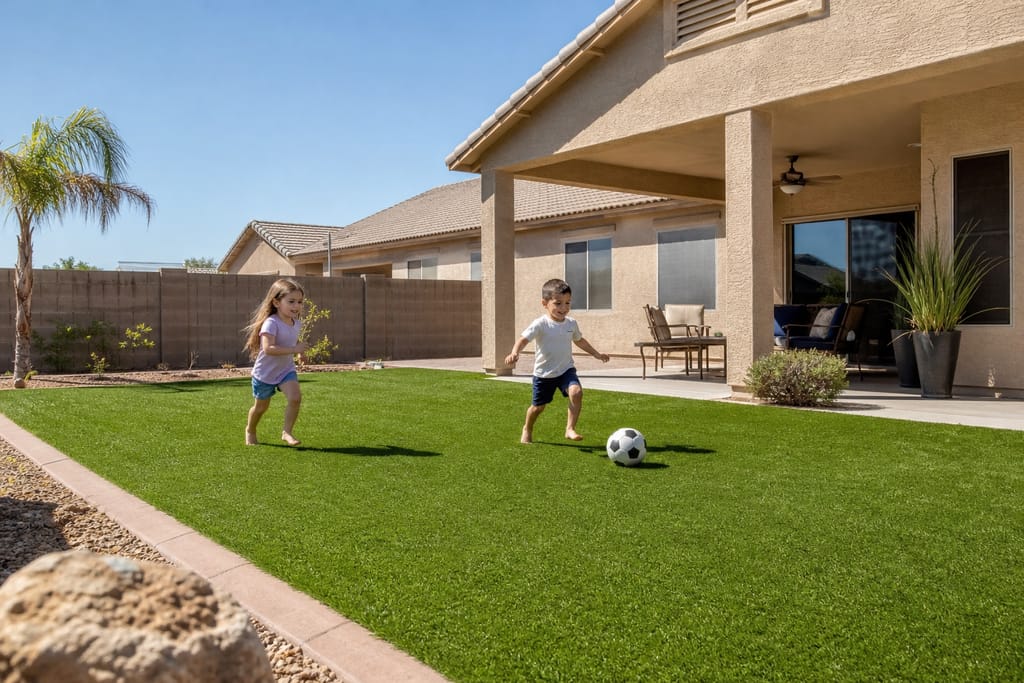
Artificial Turf Installation
Artificial turf installation in Buckeye, AZ. Full yard turf, base prep for desert soil, free estimates.
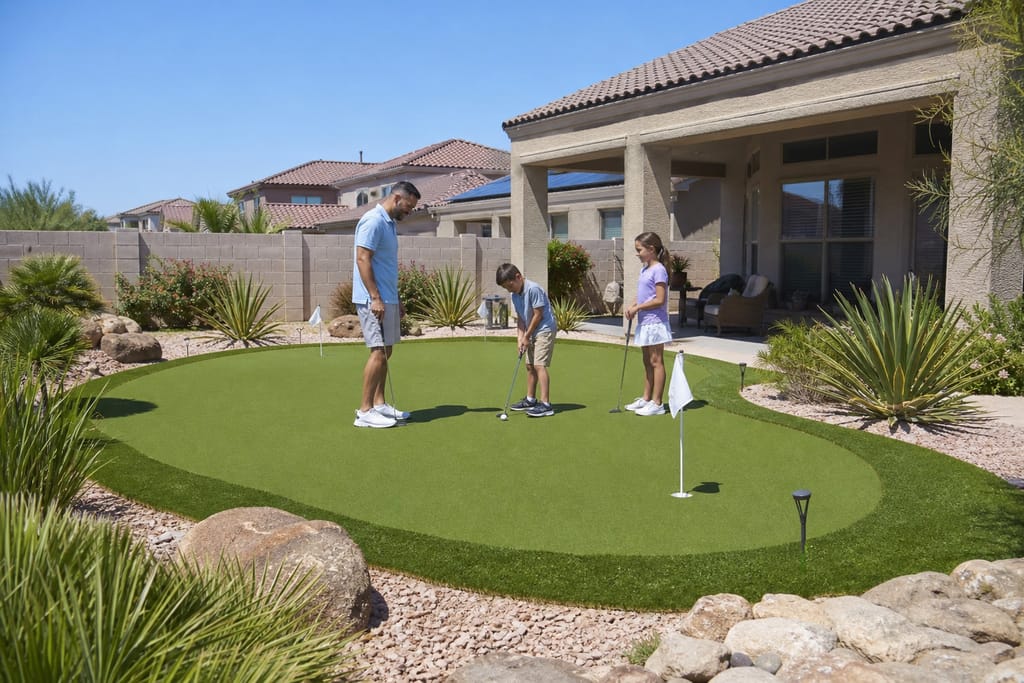
Putting Green Installation
Custom putting green installation in Buckeye, AZ with contoured bases and true-roll turf. Free estimates from Buckeye Artificial Turf Pros.
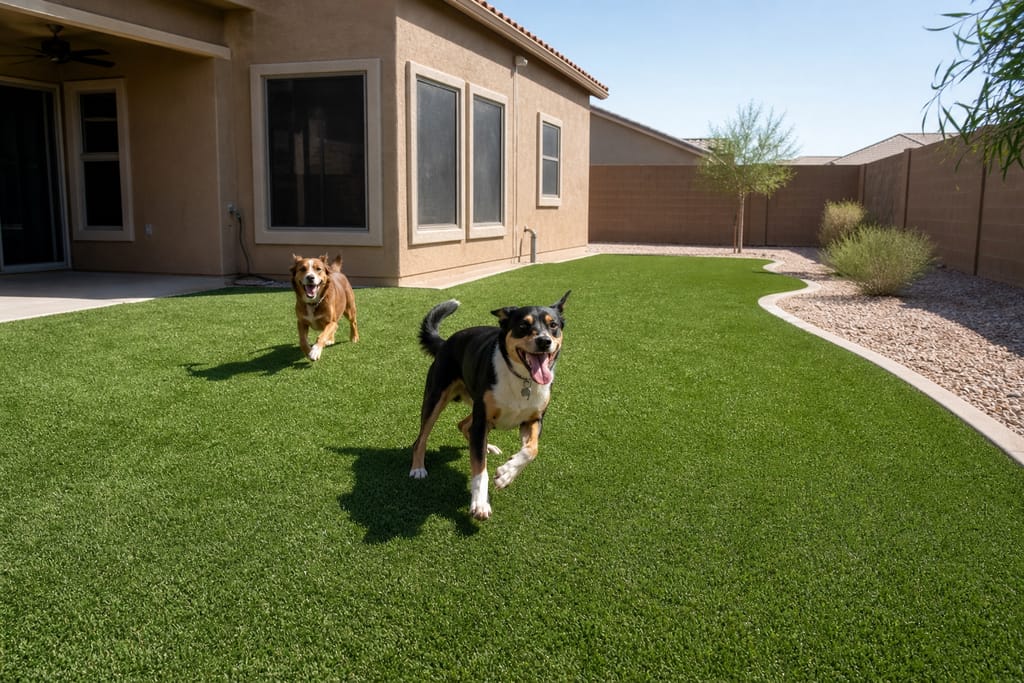
Pet Turf Installation
Pet turf installation in Buckeye, AZ with drainage backing and odor-resistant infill built for desert heat. Free estimates available.
Ask about Desert Climate Turf Conversion (Dead-Lawn Replacement)
Tell us about the project and how to reach you.